Price matters when you’re buying safety footwear. It matters even more when you’re buying 20, 50 or 100 pairs at a time.
But the cheapest boot on the quote can become an expensive decision if it isn’t suited to the work.
A worker spending ten hours on a production floor has very different needs from someone walking through a construction site covered in sharp debris. A driver moving between a vehicle and loading bays doesn’t necessarily need the same boot as someone working in a refinery.
That’s why the job should come first and price later.
Look at where the boots will actually be worn
This sounds obvious, but it’s where a lot of buying decisions go wrong.
Two safety boots can look almost identical and still be built for very different working conditions.
On a construction site, nails, broken materials and metal offcuts can make underfoot penetration protection important, but a worker in a warehouse may be more concerned with grip and comfort because they spend most of the day walking on hard concrete.
Buying a cheaper option that doesn’t have the right protection can mean replacing it sooner, dealing with unnecessary discomfort or, more seriously, leaving the worker exposed to a hazard the footwear was never designed to handle.
More features don’t automatically mean better value
There’s another mistake we see: choosing the boot with the longest feature list.
More protection sounds better, but only when the job actually calls for it.
A steel midsole is useful where sharp objects underfoot are a real risk. In another environment, that extra protection may not be necessary, and a lighter model could be more comfortable for someone who spends most of the day walking or driving.
The same applies to heat resistance, anti-static properties, oil resistance and other safety features; each one has a purpose, and that purpose should match the work.
Think about hour eight, not minute five
Most safety boots feel acceptable when you try them on for a few minutes, but the real test comes later.
After hours on concrete, poor cushioning becomes noticeable, and so does poor fit. A boot that’s slightly too loose starts moving around on the foot, while one that’s too tight creates pressure where you don’t want it.
That’s why fit and sole construction deserve just as much attention as the toe cap.
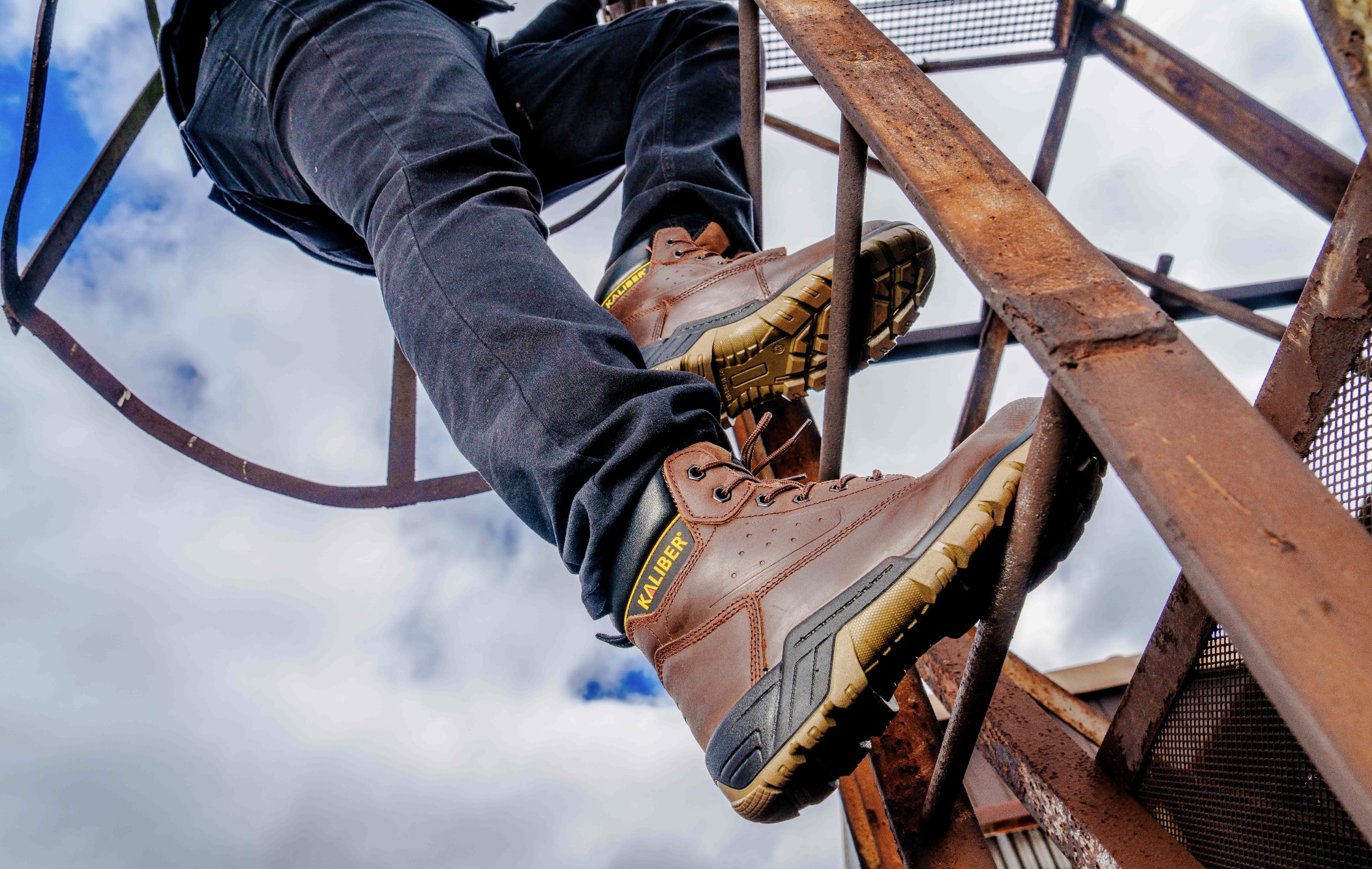
Kaliber uses energy-absorbing dual-density polyurethane sole units across much of its safety range. The softer layer helps absorb impact underfoot, while the harder outer layer is designed to handle everyday wear and provide grip.
You usually only start noticing the sole when the support or grip begins to go.
Cheap only works when it lasts
The price on the box is one number. The cost over a year is another.
If a cheaper pair needs replacing twice as often, the initial saving starts looking very different.
There is no fixed lifespan for safety footwear. A pair worn every day on rough ground will age differently from one used occasionally in a cleaner environment. The way the boots are worn and cared for matters too.
Condition is more useful than age alone, which is why it helps to check the tread regularly, look for separation between the upper and sole, and pay attention to damage around the toe area or any noticeable loss of support.
Once safety footwear is badly worn or damaged, continuing to wear it simply to delay replacement can create a bigger problem than the cost of a new pair.
Check the standards before you compare prices
Safety footwear is PPE, so the markings on the product matter.
Depending on the boot, you may see classifications covering impact protection, slip resistance, oil resistance, anti-static properties and penetration resistance. Those classifications show which safety requirements the footwear has been tested against.
Kaliber safety footwear is manufactured in ISO-accredited facilities, with safety models carrying the relevant EN ISO 20345 classifications and NRCS approvals for their intended applications.
If two boots sit at different price points, compare their classifications and intended use before deciding which one offers better value.
Buying for a team? Don’t assume everyone needs the same boot
Ordering one model across an entire business is simple, but it isn’t always the best fit for the way that business actually works.
A maintenance technician may spend time around sharp debris, while a driver moves between the cab and loading areas. Warehouse staff could spend most of the day walking on smooth concrete, while another employee regularly enters an active construction site.
Breaking the workforce down by role can make safety footwear purchasing far more sensible. Some workers may need additional protection, while others may benefit more from a lighter, more flexible option.
You can still control the budget. You’re simply spending it where the protection is actually needed.
Choose for the job, then compare the price
Kaliber offers safety boots and safety shoes for a wide range of South African industries, including construction, mining, agriculture, manufacturing, transport and general industrial work.
Start with the environment, the hazards and the demands of the role. Once you know what the footwear needs to do, comparing price becomes much more useful.
Explore the range at https://kaliberfootwear.co.za/ or speak to an approved Kaliber reseller about the right footwear for your working environment.